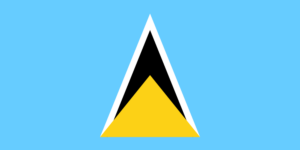
Saint Lucia
England and France contested Saint Lucia -- with its fine natural harbor at Castries and burgeoning sugar industry -- throughout the 17th and early 18th centuries, with possession changing 14 times; it was finally ceded to the UK in 1814 and became part of the British Windward…
Location

Source: CIA World Factbook (public domain)
Geography
the twin Pitons (Gros Piton and Petit Piton), striking cone-shaped peaks south of Soufrière, are one of the scenic natural highlights of the Caribbean
Source: CIA World Factbook (public domain)
History
England and France contested Saint Lucia -- with its fine natural harbor at Castries and burgeoning sugar industry -- throughout the 17th and early 18th centuries, with possession changing 14 times; it was finally ceded to the UK in 1814 and became part of the British Windward Islands colony. Even after the abolition of slavery on its plantations in 1834, Saint Lucia remained an agricultural island, dedicated to producing tropical commodity crops. In the mid-20th century, Saint Lucia joined the West Indies Federation (1958–1962) and in 1967 became one of the six members of the West Indies Associated States, with internal self-government. In 1979, Saint Lucia gained full independence.
Source: CIA World Factbook (public domain)
Government
parliamentary democracy under a constitutional monarchy; a Commonwealth realm. Independence: 22 February 1979 (from the UK)
Source: CIA World Factbook (public domain)
Economy
upper middle-income, tourism-based Caribbean island economy; environmentally fragile; energy import-dependent; major banana producer; well-educated labor force; key infrastructure, IT, and communications investments
Source: CIA World Factbook (public domain)
Suggested Reading
Adopt This Country
Will you help us keep the Saint Lucia page accurate and up to date?
Adopt This Country