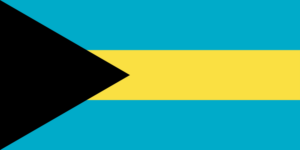
Bahamas, The
Lucayan Indians inhabited the Bahama islands when Christopher COLUMBUS first set foot in the New World in 1492. British settlement of the islands began in 1647; the islands became a colony in 1783.
Location
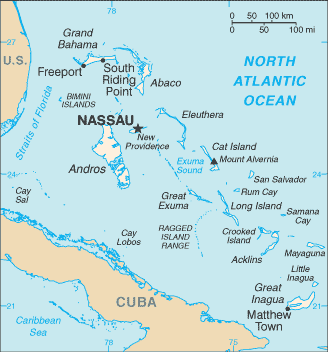
Source: CIA World Factbook (public domain)
Geography
strategic location adjacent to US and Cuba; extensive island chain of which 30 are inhabited
Source: CIA World Factbook (public domain)
History
Lucayan Indians inhabited the Bahama islands when Christopher COLUMBUS first set foot in the New World in 1492. British settlement of the islands began in 1647; the islands became a colony in 1783. Piracy thrived in the 17th and 18th centuries because of The Bahamas' close proximity to shipping lanes. Since gaining independence from the UK in 1973, The Bahamas has prospered through tourism, international banking, and investment management, which comprise up to 85% of GDP. Because of its proximity to the US -- the nearest Bahamian landmass is only 80 km (50 mi) from Florida -- the country is a major transshipment point for illicit trafficking to the US mainland, as well as to Europe. US law enforcement agencies cooperate closely with The Bahamas; the Drug Enforcement Administration, US Coast Guard, and US Customs and Border Protection assist Bahamian authorities with maritime security and law enforcement through Operation Bahamas, Turks and Caicos, or OPBAT.
Source: CIA World Factbook (public domain)
Government
parliamentary democracy under a constitutional monarchy; a Commonwealth realm. Independence: 10 July 1973 (from the UK)
Source: CIA World Factbook (public domain)
Economy
high-income tourism and financial services economy; major income inequality; strong US bilateral relations; several tax relief programs; targeted investment in agriculture, energy, light manufacturing, and technology industries
Source: CIA World Factbook (public domain)
Suggested Reading
Adopt This Country
Will you help us keep the Bahamas, The page accurate and up to date?
Adopt This Country