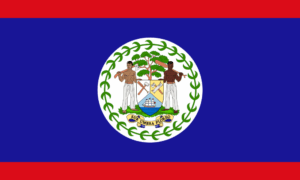
Belize
Belize was the site of several Mayan city states until their decline at the end of the first millennium A.D. The British and Spanish disputed the region in the 17th and 18th centuries; it formally became the colony of British Honduras in 1862.
Location
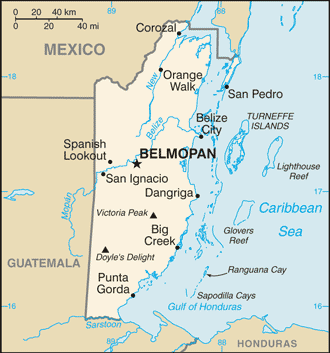
Source: CIA World Factbook (public domain)
Geography
only country in Central America without a coastline on the North Pacific Ocean
Source: CIA World Factbook (public domain)
History
Belize was the site of several Mayan city states until their decline at the end of the first millennium A.D. The British and Spanish disputed the region in the 17th and 18th centuries; it formally became the colony of British Honduras in 1862. Territorial disputes between the UK and Guatemala delayed the independence of Belize until 1981. Guatemala refused to recognize the new nation until 1992, and the two countries are still involved in an ongoing border dispute. Tourism has become the mainstay of the economy. Current concerns include the country's heavy foreign debt burden, high crime rates, high unemployment combined with a majority youth population, growing involvement in the Mexican and South American drug trade, and one of the highest HIV/AIDS prevalence rates in Central America.
Source: CIA World Factbook (public domain)
Government
parliamentary democracy (National Assembly) under a constitutional monarchy; a Commonwealth realm. Independence: 21 September 1981 (from the UK)
Source: CIA World Factbook (public domain)
Economy
tourism- and agriculture-driven economy; strong post-pandemic rebound; innovative and ecological bond restructuring that significantly lowered public debt and expanded marine protections; central bank offering USD-denominated treasury notes; high mobility across borders
Source: CIA World Factbook (public domain)
Suggested Reading
Adopt This Country
Will you help us keep the Belize page accurate and up to date?
Adopt This Country