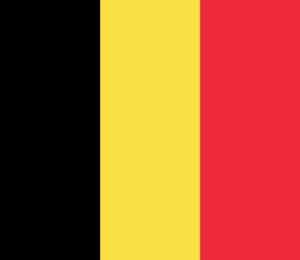
Belgium
Belgium became independent from the Netherlands in 1830; it was occupied by Germany during World Wars I and II. The country prospered as a modern, technologically advanced European state and member of NATO and the EU.
Location
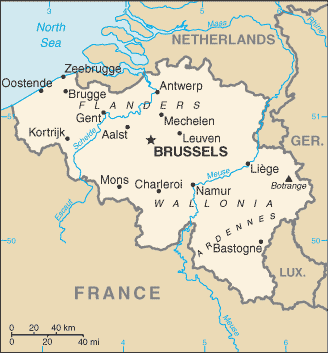
Source: CIA World Factbook (public domain)
Geography
crossroads of Western Europe; most West European capitals are within 1,000 km of Brussels, the seat of both the EU and NATO
Source: CIA World Factbook (public domain)
History
Belgium became independent from the Netherlands in 1830; it was occupied by Germany during World Wars I and II. The country prospered as a modern, technologically advanced European state and member of NATO and the EU. In recent years, longstanding tensions between the Dutch-speaking Flemish of the north and the French-speaking Walloons of the south have led to constitutional amendments granting these regions formal recognition and autonomy. The capital city of Brussels is home to numerous international organizations, including the EU and NATO.
Source: CIA World Factbook (public domain)
Government
federal parliamentary democracy under a constitutional monarchy. Independence: 4 October 1830 (a provisional government declared independence from the Netherlands); 21 July 1831 (King LEOPOLD I ascended to the throne)
Source: CIA World Factbook (public domain)
Economy
high-income, core EU and eurozone economy; slow growth with weakened domestic consumption and export demand; high public debt and structural deficits linked to social spending; aging workforce with weak productivity growth and participation rates
Source: CIA World Factbook (public domain)
Suggested Reading
Adopt This Country
Will you help us keep the Belgium page accurate and up to date?
Adopt This Country