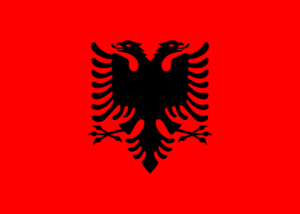
Albania
After declaring independence from the Ottoman Empire in 1912, Albania experienced a period of political upheaval that led to a short-lived monarchy, which ended in 1939 when Italy conquered the country.
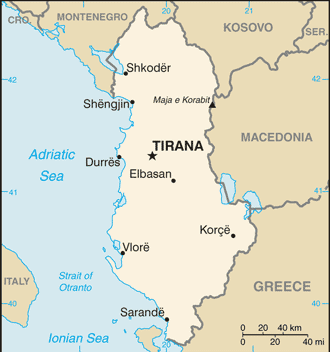
Location
Source: CIA World Factbook (public domain)
Geography
strategic location along Strait of Otranto (links Adriatic Sea to Ionian Sea and Mediterranean Sea)
Source: CIA World Factbook (public domain)
History
After declaring independence from the Ottoman Empire in 1912, Albania experienced a period of political upheaval that led to a short-lived monarchy, which ended in 1939 when Italy conquered the country. Germany then occupied Albania in 1943, and communist partisans took over the country in 1944. Albania allied itself first with the USSR (until 1960) and then with China (until 1978). In the early 1990s, Albania ended communist rule and established a multiparty democracy. Government-endorsed pyramid schemes in 1997 led to economic collapse and civil disorder, which only ended when UN peacekeeping troops intervened. In 1999, some 450,000 ethnic Albanians fled from Kosovo to Albania to escape the war with the Serbs. Albania joined NATO in 2009 and became an official candidate for EU membership in 2014.
Source: CIA World Factbook (public domain)
Government
parliamentary republic. Independence: 28 November 1912 (from the Ottoman Empire)
Source: CIA World Factbook (public domain)
Economy
upper-middle-income Balkan economy; EU accession candidate; growth bolstered by tourism, agriculture, mining, construction, and private consumption; fiscal consolidation through revenue collection and tax compliance enhancements to address public debt; challenges include weak governance, corruption, and high emigration rates
Source: CIA World Factbook (public domain)
Suggested Reading
Adopt This Country
Will you help us keep the Albania page accurate and up to date?
Adopt This Country