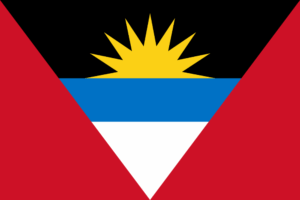
Antigua and Barbuda
The Siboney were the first people to inhabit the islands of Antigua and Barbuda in 2400 B.C., but the Arawaks populated the islands when Christopher COLUMBUS landed on his second voyage in 1493. Early Spanish and French settlements were succeeded by an English colony in 1667.
Location
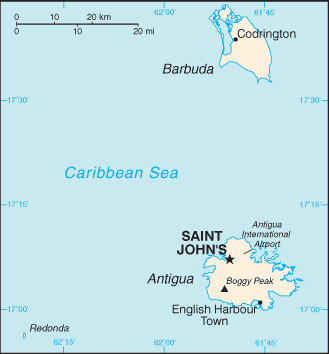
Source: CIA World Factbook (public domain)
Geography
Antigua has a deeply indented shoreline with many natural harbors and beaches; Barbuda has a large western harbor
Source: CIA World Factbook (public domain)
History
The Siboney were the first people to inhabit the islands of Antigua and Barbuda in 2400 B.C., but the Arawaks populated the islands when Christopher COLUMBUS landed on his second voyage in 1493. Early Spanish and French settlements were succeeded by an English colony in 1667. Slavery, which provided labor on the sugar plantations on Antigua, was abolished in 1834. The islands became an independent state within the British Commonwealth of Nations in 1981. In 2017, Hurricane Irma passed over the island of Barbuda, devastating the island and forcing the evacuation of the population to Antigua. Almost all of the structures on Barbuda were destroyed and the vegetation stripped, but Antigua was spared the worst.
Source: CIA World Factbook (public domain)
Government
parliamentary democracy under a constitutional monarchy; a Commonwealth realm. Independence: 1 November 1981 (from the UK)
Source: CIA World Factbook (public domain)
Economy
dual island-tourism and construction-driven economy; emerging “blue economy”; limited water supply and susceptibility to hurricanes limit activity; improving road infrastructure; friendly to foreign direct investment; looking at financial innovation in cryptocurrency and blockchain technologies
Source: CIA World Factbook (public domain)
Suggested Reading
Adopt This Country
Will you help us keep the Antigua and Barbuda page accurate and up to date?
Adopt This Country