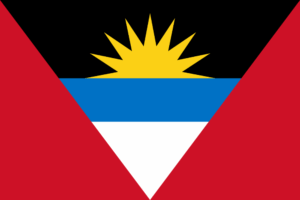
Antigua and Barbuda
The Country of the Week

Quick Facts
- Capital
- Saint John's
- Population
- 102,634 (2024 est.)
- Area
- 443 sq km (Antigua 280 sq km; Barbuda 161 sq km)
- Government
- parliamentary democracy under a constitutional monarchy; a Commonwealth realm
- Languages
- English (official), Antiguan Creole (an English-based creole)
- Religions
- Protestant 68.3% (Anglican 17.6%, Seventh Day Adventist 12.4%, Pentecostal 12.2%, Moravian 8.3%, Methodist 5.6%, Wesleyan Holiness 4.5%, Church of God 4.1%, Baptist 3.6%), Roman Catholic 8.2%, other 12.2%, unspecified 5.5%, none 5.9% (2011 est.)
- Ethnic Groups
- African descent 87.3%, mixed 4.7%, Hispanic 2.7%, White 1.6%, other 2.7%, unspecified 0.9% (2011 est.)
- Currency
- East Caribbean dollars (XCD)
- Life Expectancy
- 78.3 years (2024 est.)
- Internet Domain
- .ag
- Climate
- tropical maritime; little seasonal temperature variation
- Terrain
- mostly low-lying limestone and coral islands, with some higher volcanic areas
- Natural Resources
- NEGL; pleasant climate fosters tourism
- Major Exports
- refined petroleum, ships, soybean meal, shellfish, paintings (2023)
Source: CIA World Factbook (public domain)
Overview
The Siboney were the first people to inhabit the islands of Antigua and Barbuda in 2400 B.C., but the Arawaks populated the islands when Christopher COLUMBUS landed on his second voyage in 1493. Early Spanish and French settlements were succeeded by an English colony in 1667.