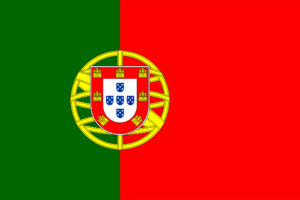
Portugal
A global maritime power during the 15th and 16th centuries, Portugal lost much of its wealth and status with the destruction of Lisbon in a 1755 earthquake, occupation during the Napoleonic Wars, and the independence of Brazil, its wealthiest colony, in 1822.
Location
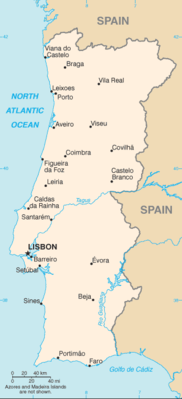
Source: CIA World Factbook (public domain)
Geography
Azores and Madeira Islands occupy strategic locations along western sea approaches to Strait of Gibraltar; they are two of the four North Atlantic archipelagos that make up Macaronesia; the others are the Canary Islands (Spain) and Cabo Verde
Source: CIA World Factbook (public domain)
History
A global maritime power during the 15th and 16th centuries, Portugal lost much of its wealth and status with the destruction of Lisbon in a 1755 earthquake, occupation during the Napoleonic Wars, and the independence of Brazil, its wealthiest colony, in 1822. A revolution deposed the monarchy in 1910, and for most of the next six decades, repressive governments ran the country. In 1974, a left-wing military coup ushered in broad democratic reforms. The following year, Portugal granted independence to all its African colonies. Portugal is a founding member of NATO and entered the EC (now the EU) in 1986.
Source: CIA World Factbook (public domain)
Government
semi-presidential republic. Independence: 1143 (Kingdom of Portugal recognized); 1 December 1640 (independence reestablished after 60 years of Spanish rule); 5 October 1910 (republic proclaimed)
Source: CIA World Factbook (public domain)
Economy
high-income EU and eurozone economy; strong services sector led by tourism and banking; tight labor market; growth driven by private consumption, trade surplus, and public investment from EU funds; declining public debt
Source: CIA World Factbook (public domain)
Suggested Reading
Adopt This Country
Will you help us keep the Portugal page accurate and up to date?
Adopt This Country