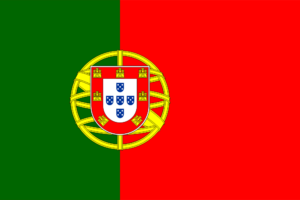
Portugal
The Country of the Week

Quick Facts
- Capital
- Lisbon
- Population
- 10,194,277 (2025 est.)
- Area
- 92,090 sq km
- Government
- semi-presidential republic
- Languages
- Portuguese (official), Mirandese (official, but locally used)
- Religions
- Catholic 68.1%, not applicable 12.9%, no religion 12.0%, no response 2.2%, Protestant 1.8%, other 1.0%; less than 1%: other Christians, Orthodox, Muslim (2021 est.)
- Ethnic Groups
- Portuguese 95%; citizens from Portugal’s former colonies in Africa, Asia (Han Chinese), and South America (Brazilian) and other foreign born 5%
- Currency
- euros (EUR)
- Life Expectancy
- 81.9 years (2024 est.)
- Internet Domain
- .pt
- Climate
- maritime temperate; cool and rainy in north, warmer and drier in south
- Terrain
- the west-flowing Tagus River divides the country: the north is mountainous toward the interior, while the south is characterized by rolling plains
- Natural Resources
- fish, forests (cork), iron ore, copper, zinc, tin, tungsten, silver, gold, uranium, marble, clay, gypsum, salt, arable land, hydropower
- Major Exports
- cars, garments, vehicle parts/accessories, unpackaged medicine, refined petroleum (2023)
Source: CIA World Factbook (public domain)
Overview
A global maritime power during the 15th and 16th centuries, Portugal lost much of its wealth and status with the destruction of Lisbon in a 1755 earthquake, occupation during the Napoleonic Wars, and the independence of Brazil, its wealthiest colony, in 1822.