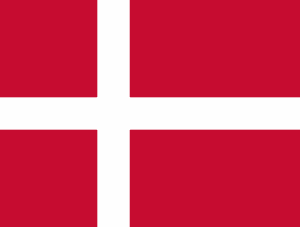
Denmark
Once the seat of Viking raiders and later a major north European power, Denmark has evolved into a modern, prosperous nation that is part of the general political and economic integration of Europe. It joined NATO in 1949 and the EEC (now the EU) in 1973.
Location
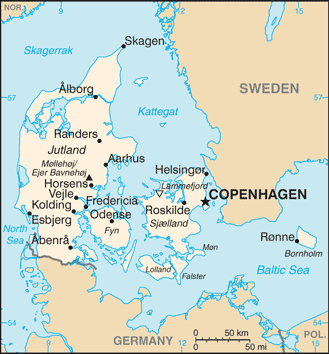
Source: CIA World Factbook (public domain)
Geography
composed of the Jutland Peninsula and a group of more than 400 islands (Danish Archipelago); controls Danish Straits (Skagerrak and Kattegat) linking Baltic and North Seas; about one-quarter of the population lives in greater Copenhagen
Source: CIA World Factbook (public domain)
History
Once the seat of Viking raiders and later a major north European power, Denmark has evolved into a modern, prosperous nation that is part of the general political and economic integration of Europe. It joined NATO in 1949 and the EEC (now the EU) in 1973. The country has opted out of certain elements of the EU's Maastricht Treaty, including the European Economic and Monetary Union and justice and home affairs issues. a 2022 referendum resulted in the removal of Denmark's 30-year opt-out on defense issues, now allowing Denmark to participate fully in the EU's Common Security and Defense Policy.
Source: CIA World Factbook (public domain)
Government
parliamentary constitutional monarchy. Independence: ca. 965 (unified and Christianized under Harald I GORMSSON); 5 June 1849 (became a parliamentary constitutional monarchy)
Source: CIA World Factbook (public domain)
Economy
high-income, EU-member, trade-oriented Nordic economy; growth driven by pharmaceuticals, energy, and services; large share of employment in public sector; fixed exchange rate pegged to euro; strong fiscal position and declining public debt; tight labor market mitigated by migrant workers and higher retirement age
Source: CIA World Factbook (public domain)
Suggested Reading
Adopt This Country
Will you help us keep the Denmark page accurate and up to date?
Adopt This Country