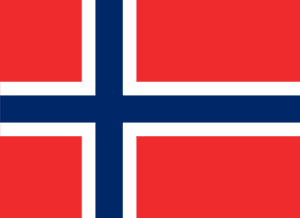
Norway
Two centuries of Viking raids into Europe tapered off after King Olav TRYGGVASON adopted Christianity in 994; conversion of the Norwegian kingdom occurred over the next several decades. In 1397, Norway was absorbed into a union with Denmark that lasted more than four centuries.
Location
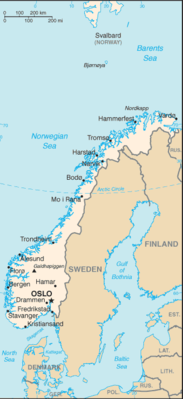
Source: CIA World Factbook (public domain)
Geography
about two-thirds mountains; some 50,000 islands off its much-indented coastline; strategic location adjacent to sea lanes and air routes in North Atlantic; one of the most rugged and longest coastlines in the world
Source: CIA World Factbook (public domain)
History
Two centuries of Viking raids into Europe tapered off after King Olav TRYGGVASON adopted Christianity in 994; conversion of the Norwegian kingdom occurred over the next several decades. In 1397, Norway was absorbed into a union with Denmark that lasted more than four centuries. In 1814, Norwegians resisted the cession of their country to Sweden and adopted a new constitution. Sweden then invaded Norway but agreed to let Norway keep its constitution in return for accepting the union under a Swedish king. Rising nationalism throughout the 19th century led to a 1905 referendum granting Norway independence. Norway remained neutral in World War I and proclaimed its neutrality at the outset of World War II, but Nazi Germany nonetheless occupied the country for five years (1940-45). In 1949, Norway abandoned neutrality and became a member of NATO. Discovery of oil and gas in adjacent waters in the late 1960s boosted Norway's economic fortunes. In referenda held in 1972 and 1994, Norway rejected joining the EU. Key domestic issues include immigration and integration of ethnic minorities, maintaining the country's extensive social safety net with an aging population, and preserving economic competitiveness.
Source: CIA World Factbook (public domain)
Government
parliamentary constitutional monarchy. Independence: 7 June 1905 (union with Sweden declared dissolved); 26 October 1905 (Sweden agreed to the repeal of the union); notable earlier dates: ca. 872 (traditional unification of Norwegian kingdoms by HARALD Fairhair); 1397 (Kalmar Union of Denmark, Norway, and Sweden); 1524 (Denmark-Norway); 17 May 1814 (Norwegian constitution adopted); 4 November 1814 (Sweden-Norway union confirmed)
Source: CIA World Factbook (public domain)
Economy
high-income, non-EU economy with trade links via European Economic Area (EEA); key role in European energy security as leader in oil, gas, and electricity exports; major fishing, forestry, and oil(?) extraction industries; oil sovereign fund supports generous welfare system; low unemployment; inflation moderating but remains above target level
Source: CIA World Factbook (public domain)
Suggested Reading
Adopt This Country
Will you help us keep the Norway page accurate and up to date?
Adopt This Country