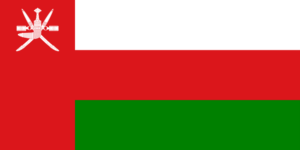
Oman
The inhabitants of the area of present-day Oman have long prospered from Indian Ocean trade. In the late 18th century, the nascent sultanate in Muscat signed the first in a series of friendship treaties with Britain.
Location
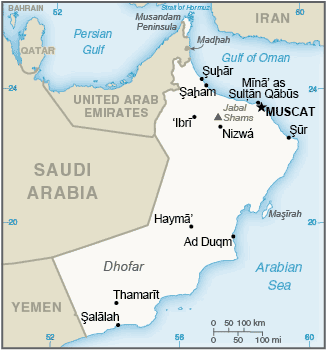
Source: CIA World Factbook (public domain)
Geography
consists of Oman proper and two northern exclaves, Musandam and Al Madhah; the former is a peninsula that occupies a strategic location adjacent to the Strait of Hormuz
Source: CIA World Factbook (public domain)
History
The inhabitants of the area of present-day Oman have long prospered from Indian Ocean trade. In the late 18th century, the nascent sultanate in Muscat signed the first in a series of friendship treaties with Britain. Over time, Oman's dependence on British political and military advisors increased, although the sultanate never became a British colony. In 1970, QABOOS bin Said Al Said overthrew his father and ruled as sultan for the next five decades. His extensive modernization program opened the country to the outside world. He prioritized strategic ties to the UK and US, and his moderate, independent foreign policy allowed Oman to maintain good relations with its neighbors and avoid external entanglements.In 2011, the popular uprisings that swept the Middle East and North Africa inspired demonstrations in Oman that called for more jobs and economic benefits and an end to corruption. In response, QABOOS implemented economic and political reforms such as granting Oman’s legislative body more power and authorizing direct elections for its lower house. Additionally, the sultan increased unemployment benefits and issued a royal directive mandating a national public- and private-sector job creation plan. As part of the government's efforts to decentralize authority and allow greater citizen participation in local governance, Oman successfully conducted its first municipal council elections in 2012. QABOOS, Oman's longest reigning monarch, died in 2020. His cousin, HAYTHAM bin Tariq Al Said, former Minister of Heritage and Culture, was sworn in as Oman's new sultan the same day.
Source: CIA World Factbook (public domain)
Government
absolute monarchy. Independence: 1650 (expulsion of the Portuguese)
Source: CIA World Factbook (public domain)
Economy
high-income, oil-based economy; large welfare system; growing government debt; citizenship-based labor force growth policy; US free trade agreement; diversifying portfolio; high female labor force participation
Source: CIA World Factbook (public domain)
Suggested Reading
Adopt This Country
Will you help us keep the Oman page accurate and up to date?
Adopt This Country