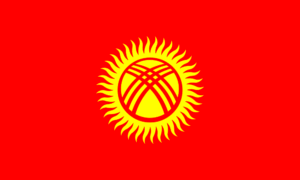
Kyrgyzstan
Kyrgyzstan is a Central Asian country of incredible natural beauty and proud nomadic traditions. The Russian Empire annexed most of the territory of present-day Kyrgyzstan in 1876.
Location
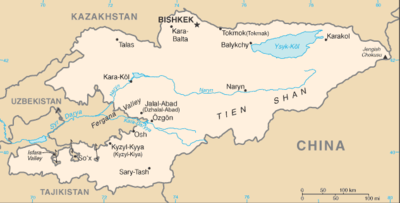
Source: CIA World Factbook (public domain)
Geography
landlocked; entirely mountainous, dominated by the Tien Shan range; 94% of the country is 1,000 m above sea level with an average elevation of 2,750 m; many tall peaks, glaciers, and high-altitude lakes
Source: CIA World Factbook (public domain)
History
Kyrgyzstan is a Central Asian country of incredible natural beauty and proud nomadic traditions. The Russian Empire annexed most of the territory of present-day Kyrgyzstan in 1876. The Kyrgyz staged a major revolt against the Tsarist Empire in 1916, during which almost one-sixth of the Kyrgyz population was killed. Kyrgyzstan became a Soviet republic in 1926 and achieved independence in 1991 when the USSR dissolved. Nationwide demonstrations in 2005 and 2010 resulted in the ouster of the country’s first two presidents, Askar AKAEV and Kurmanbek BAKIEV. Almazbek ATAMBAEV was sworn in as president in 2011. In 2017, ATAMBAEV became the first Kyrgyzstani president to serve a full term and respect constitutional term limits, voluntarily stepping down at the end of his mandate. Former prime minister and ruling Social-Democratic Party of Kyrgyzstan member Sooronbay JEENBEKOV replaced him after winning the 2017 presidential election, which was the most competitive in the country’s history despite reported cases of vote buying and abuse of public resources. In 2020, protests against parliamentary election results spread across Kyrgyzstan, leading to JEENBEKOV’s resignation and catapulting previously imprisoned Sadyr JAPAROV to acting president. In 2021, Kyrgyzstanis formally elected JAPAROV as president and approved a referendum to move Kyrgyzstan from a parliamentary to a presidential system. In 2021, Kyrgyzstanis voted in favor of constitutional changes that consolidated power in the presidency. Pro-government parties won a majority in the 2021 legislative elections. Continuing concerns for Kyrgyzstan include the trajectory of democratization, endemic corruption, tense regional relations, vulnerabilities due to climate change, border security vulnerabilities, and potential terrorist threats.
Source: CIA World Factbook (public domain)
Government
parliamentary republic. Independence: 31 August 1991 (from the Soviet Union)
Source: CIA World Factbook (public domain)
Economy
landlocked, lower-middle-income Central Asian economy; natural resource rich; growing hydroelectricity and tourism; high remittances; corruption limits investment; COVID-19 and political turmoil hurt GDP, limited public revenues, and increased spending
Source: CIA World Factbook (public domain)
Suggested Reading
Adopt This Country
Will you help us keep the Kyrgyzstan page accurate and up to date?
Adopt This Country