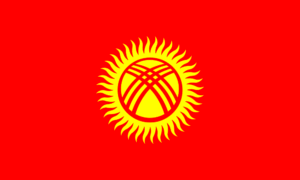
Kyrgyzstan
The Country of the Week

Quick Facts
- Capital
- Bishkek
- Population
- 6,219,751 (2025 est.)
- Area
- 199,951 sq km
- Government
- parliamentary republic
- Religions
- Muslim 90% (majority Sunni), Christian 7% (Russian Orthodox 3%), other 3% (includes Jewish, Buddhist, Baha'i) (2017 est.)
- Ethnic Groups
- Kyrgyz 73.8%, Uzbek 14.8%, Russian 5.1%, Dungan 1.1%, other 5.2% (includes Uyghur, Tajik, Turk, Kazakh, Tatar, Ukrainian, Korean, German) (2021 est.)
- Currency
- soms (KGS)
- Life Expectancy
- 72.9 years (2024 est.)
- Internet Domain
- .kg
- Climate
- dry continental to polar in high Tien Shan Mountains; subtropical in southwest (Fergana Valley); temperate in northern foothill zone
- Terrain
- peaks of the Tien Shan mountain range and associated valleys and basins encompass the entire country
- Natural Resources
- abundant hydropower; gold, rare earth metals; locally exploitable coal, oil, and natural gas; other deposits of nepheline, mercury, bismuth, lead, and zinc
- Major Exports
- gold, coal, precious metal ore, refined petroleum, garments (2023)
Source: CIA World Factbook (public domain)
Overview
Kyrgyzstan is a Central Asian country of incredible natural beauty and proud nomadic traditions. The Russian Empire annexed most of the territory of present-day Kyrgyzstan in 1876.