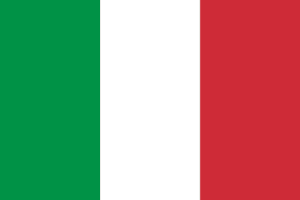
Italy
Italy became a nation-state in 1861 when the regional states of the peninsula, along with Sardinia and Sicily, were united under King Victor EMMANUEL II.
Location
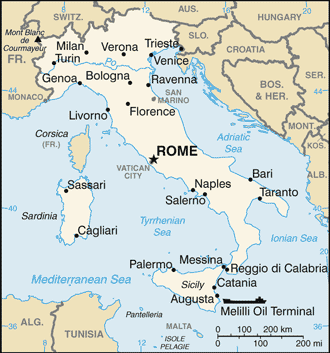
Source: CIA World Factbook (public domain)
Geography
strategic location dominating central Mediterranean, as well as southern sea and air approaches to Western Europe
Source: CIA World Factbook (public domain)
History
Italy became a nation-state in 1861 when the regional states of the peninsula, along with Sardinia and Sicily, were united under King Victor EMMANUEL II. An era of parliamentary government came to a close in the early 1920s when Benito MUSSOLINI established a Fascist dictatorship. His alliance with Nazi Germany led to Italy's defeat in World War II. A democratic republic replaced the monarchy in 1946, and economic revival followed. Italy is a charter member of NATO, as well as the European Economic Community (EEC) and its successors, the EC and the EU. It has been at the forefront of European economic and political unification, joining the Economic and Monetary Union in 1999. Persistent problems include sluggish economic growth, high youth and female unemployment, organized crime, corruption, and economic disparities between southern Italy and the more prosperous north.
Source: CIA World Factbook (public domain)
Government
parliamentary republic. Independence: 17 March 1861
Source: CIA World Factbook (public domain)
Economy
high-income, core EU economy; strong services, manufacturing, and tourism sectors; modest growth supported by net exports, low inflation, and public investments via EU funds; tight labor market with aging workforce and shortages in specialized skills; high public debt levels
Source: CIA World Factbook (public domain)
Suggested Reading
Adopt This Country
Will you help us keep the Italy page accurate and up to date?
Adopt This Country