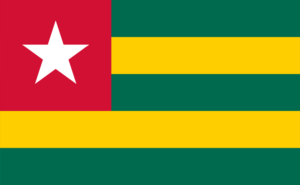
Togo
From the 11th to the 16th centuries, various ethnic groups settled the Togo region.
Location
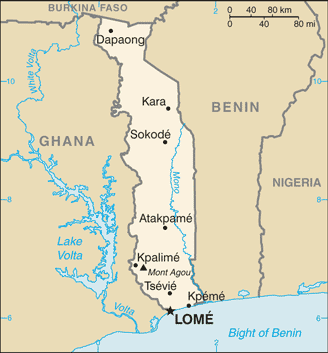
Source: CIA World Factbook (public domain)
Geography
stretches through six distinct geographic regions; climate varies from tropical to savanna
Source: CIA World Factbook (public domain)
History
From the 11th to the 16th centuries, various ethnic groups settled the Togo region. From the 16th to the 18th centuries, the coastal region became a major trading center for enslaved people, and the surrounding region took on the name of "The Slave Coast." In 1884, Germany declared the area a protectorate called Togoland, which included present-day Togo. After World War I, colonial rule over Togo was transferred to France. French Togoland became Togo upon independence in 1960. Gen. Gnassingbe EYADEMA, installed as military ruler in 1967, ruled Togo with a heavy hand for almost four decades. Despite the facade of multi-party elections instituted in the early 1990s, EYADEMA largely dominated the government. His Rally of the Togolese People (RPT) party has been in power almost continually since 1967, with its successor, the Union for the Republic, maintaining a majority of seats in today's legislature. Upon EYADEMA's death in 2005, the military installed his son, Faure GNASSINGBE, as president and then engineered his formal election two months later. Togo held its first relatively free and fair legislative elections in 2007. Since then, GNASSINGBE has started the country along a gradual path to democratic reform. Togo has held multiple presidential and legislative elections, and in 2019, the country held its first local elections in 32 years. Despite those positive moves, political reconciliation has moved slowly, and the country experiences periodic outbursts of protests from frustrated citizens, leading to violence between security forces and protesters. Constitutional changes in 2019 to institute a runoff system in presidential elections and to establish term limits have done little to reduce the resentment many Togolese feel after more than 50 years of one-family rule. GNASSINGBE became eligible for his current fourth term and one additional fifth term under the new rules. The next presidential election is set for 2025.
Source: CIA World Factbook (public domain)
Government
presidential republic. Independence: 27 April 1960 (from French-administered UN trusteeship)
Source: CIA World Factbook (public domain)
Economy
low-income West African economy; primarily agrarian economy; has a deep-water port; growing international shipping locale; improving privatization and public budgeting transparency; key phosphate mining industry; extremely high rural poverty
Source: CIA World Factbook (public domain)
Suggested Reading
Adopt This Country
Will you help us keep the Togo page accurate and up to date?
Adopt This Country