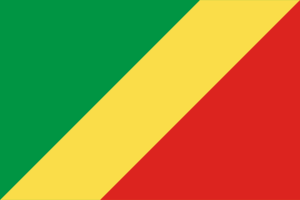
Congo, Republic of the
Upon independence in 1960, the former French region of Middle Congo became the Republic of the Congo.
Location
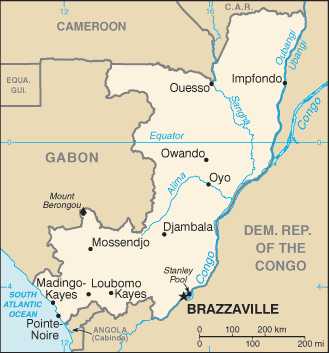
Source: CIA World Factbook (public domain)
Geography
about 70% of the population lives in Brazzaville, Pointe-Noire, or along the railroad between them
Source: CIA World Factbook (public domain)
History
Upon independence in 1960, the former French region of Middle Congo became the Republic of the Congo. From 1968 to 1992, the country was named the People’s Republic of the Congo. A quarter-century of experimentation with Marxism was abandoned in 1990, and a democratically elected government took office in 1992, at which time the country reverted to "the Republic of the Congo" name. A two-year civil war that ended in 1999 restored to power former President Denis SASSOU-Nguesso, who had ruled from 1979 to 1992. A new constitution adopted three years later provided for a multi-party system and a seven-year presidential term, and the next elections retained SASSOU-Nguesso. After a year of renewed fighting, SASSOU-Nguesso and southern-based rebel groups agreed to a final peace accord in 2003. SASSOU-Nguesso was reelected in 2009 and, after passing a constitutional referendum allowing him to run for additional terms, was reelected again in 2016 and 2021. The Republic of the Congo is one of Africa's largest petroleum producers.
Source: CIA World Factbook (public domain)
Government
presidential republic. Independence: 15 August 1960 (from France)
Source: CIA World Factbook (public domain)
Economy
primarily an oil- and natural resources-based economy; recovery from mid-2010s oil devaluation has been slow and curtailed by COVID-19; extreme poverty increasing, particularly in southern rural regions; attempting to implement recommended CEMAC reforms; increasing likelihood of debt default
Source: CIA World Factbook (public domain)
Suggested Reading
Adopt This Country
Will you help us keep the Congo, Republic of the page accurate and up to date?
Adopt This Country