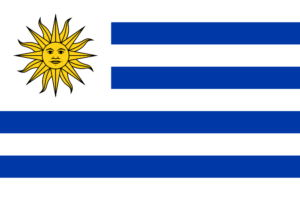
Uruguay
The Country of the Week
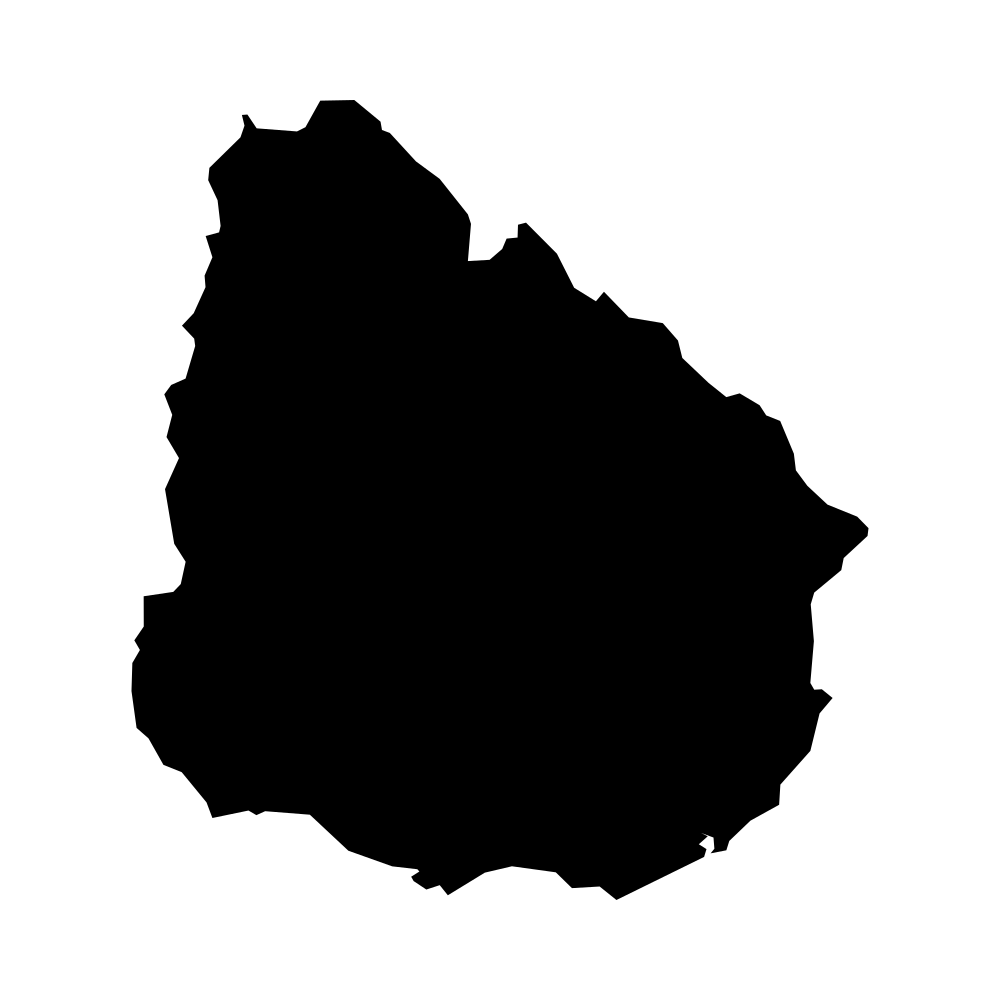
Quick Facts
- Capital
- Montevideo
- Population
- 3,449,444 (2025 est.)
- Area
- 176,215 sq km
- Government
- presidential republic
- Religions
- Roman Catholic 36.5%, Protestant 5% (Evangelical (non-specific) 4.6%, Adventist 0.2%, Protestant (non-specific) 0.3%), African American Cults/Umbanda 2.8%, Jehovah's Witness 0.6%, Church of Jesus Christ 0.2%, other 1%, Believer (not belonging to the church) 1.8%, agnostic 0.3%, atheist 1.3%, none 47.3%, unspecified 3.4%Roman Catholic 42%, Protestant 15%, other 6%, agnostic 3%, atheist 10%, unspecified 24% (2023 est.)
- Ethnic Groups
- White 87.7%, Black 4.6%, Indigenous 2.4%, other 0.3%, none or unspecified 5% (2011 est.)
- Currency
- Uruguayan pesos (UYU)
- Life Expectancy
- 78.9 years (2024 est.)
- Internet Domain
- .uy
- Climate
- warm temperate; freezing temperatures almost unknown
- Terrain
- mostly rolling plains and low hills; fertile coastal lowland
- Natural Resources
- arable land, hydropower, minor minerals, fish
- Major Exports
- wood pulp, beef, milk, rice, wood (2023)
Source: CIA World Factbook (public domain)
Overview
The Spanish founded the city of Montevideo in modern-day Uruguay in 1726 as a military stronghold, and it soon became an important commercial center due to its natural harbor. Argentina initially claimed Uruguay, but Brazil annexed the country in 1821.