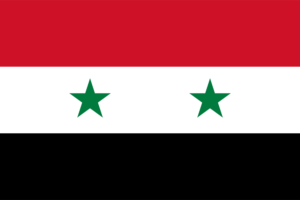
Syria
The Country of the Week

Quick Facts
- Capital
- Damascus
- Population
- 24,261,882 (2025 est.)
- Area
- 187,437 sq km
- Government
- transitional presidential republic
- Religions
- Muslim 87% (official; includes Sunni 74% and Alawi, Ismaili, and Shia 13%), Christian 10% (includes Orthodox, Uniate, and Nestorian), Druze 3%
- Ethnic Groups
- Arab ~50%, Alawite ~15%, Kurd ~10%, Levantine ~10%, other ~15% (includes Druze, Ismaili, Imami, Nusairi, Assyrian, Turkoman, Armenian)
- Currency
- Syrian pounds (SYP)
- Life Expectancy
- 74.8 years (2024 est.)
- Internet Domain
- .sy
- Climate
- mostly desert; hot, dry, sunny summers (June to August) and mild, rainy winters (December to February) along coast; cold weather with snow or sleet periodically in Damascus
- Terrain
- primarily semiarid and desert plateau; narrow coastal plain; mountains in west
- Natural Resources
- petroleum, phosphates, chrome and manganese ores, asphalt, iron ore, rock salt, marble, gypsum, hydropower
- Major Exports
- olive oil, phosphates, spice seeds, cotton, tomatoes (2023)
Source: CIA World Factbook (public domain)
Overview
After World War I, France acquired a mandate over the northern portion of the former Ottoman Empire province of Syria. The French administered the area until granting it independence in 1946. The new country lacked political stability and experienced a series of military coups.