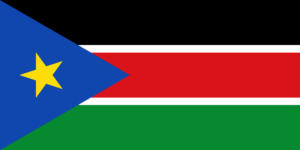
South Sudan
The Country of the Week

Quick Facts
- Capital
- Juba
- Population
- 12,703,714 (2024 est.)
- Area
- 644,329 sq km
- Government
- presidential republic
- Religions
- Christian 60.5%, folk religion 32.9%, Muslim 6.2%, other <1%, unaffiliated <1% (2020 est.)
- Ethnic Groups
- Dinka (Jieng) approximately 35-40%, Nuer (Naath) approximately 15%, Shilluk (Chollo), Azande, Bari, Kakwa, Kuku, Murle, Mandari, Didinga, Ndogo, Bviri, Lndi, Anuak, Bongo, Lango, Dungotona, Acholi, Baka, Fertit (2011 est.)
- Currency
- South Sudanese pounds (SSP)
- Life Expectancy
- 60.3 years (2024 est.)
- Internet Domain
- .ss
- Climate
- hot with seasonal rainfall influenced by the annual shift of the Inter-Tropical Convergence Zone; rainfall heaviest in upland areas of the south and diminishes to the north
- Terrain
- plains in the north and center rise to southern highlands along the border with Uganda and Kenya; the White Nile, flowing north out of the uplands of Central Africa, is the major geographic feature of the country; The Sudd (a name derived from floating vegetation that hinders navigation) is a large swampy area of more than 100,000 sq km fed by the waters of the White Nile that dominates the center of the country
- Natural Resources
- hydropower, fertile agricultural land, gold, diamonds, petroleum, hardwoods, limestone, iron ore, copper, chromium ore, zinc, tungsten, mica, silver
- Major Exports
- crude petroleum, refined petroleum, forage crops, gold, scrap iron (2023)
Source: CIA World Factbook (public domain)
Overview
South Sudan, which gained independence from Sudan in 2011, is the world’s newest country.