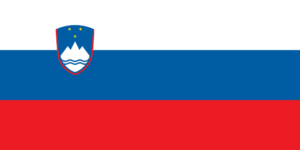
Slovenia
The Country of the Week

Quick Facts
- Capital
- Ljubljana
- Population
- 2,097,893 (2024 est.)
- Area
- 20,273 sq km
- Government
- parliamentary republic
- Religions
- Catholic 69%, Orthodox 4%, Muslim 3%, Christian 1%, other 3%, atheist 14%, non-believer/agnostic 4%, refused to answer 2% (2019 est.)
- Ethnic Groups
- Slovene 83.1%, Serb 2%, Croat 1.8%, Bosniak 1.1%, other or unspecified 12% (2002 est.)
- Currency
- euros (EUR)
- Life Expectancy
- 82.2 years (2024 est.)
- Internet Domain
- .si
- Climate
- Mediterranean climate on the coast, continental climate with mild to hot summers and cold winters in the plateaus and valleys to the east
- Terrain
- a short southwestern coastal strip of Karst topography on the Adriatic; an alpine mountain region lies adjacent to Italy and Austria in the north; mixed mountains and valleys with numerous rivers to the east
- Natural Resources
- lignite, lead, zinc, building stone, hydropower, forests
- Major Exports
- packaged medicine, cars, refined petroleum, vehicle parts/accessories, plastic products (2023)
Source: CIA World Factbook (public domain)
Overview
The Slovene lands were part of the Austro-Hungarian Empire until the latter's dissolution at the end of World War I. In 1918, Slovenia became part of the Kingdom of Serbs, Croats, and Slovenes, which was renamed Yugoslavia in 1929.