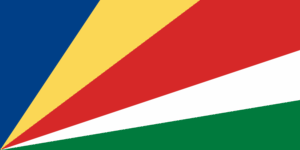
Seychelles
The Country of the Week

Quick Facts
- Capital
- Victoria
- Population
- 98,187 (2024 est.)
- Area
- 455 sq km
- Government
- presidential republic
- Languages
- Seychellois Creole (official) 89.1%, English (official) 5.1%, French (official) 0.7%, other 3.8%, unspecified 1.4% (2010 est.)
- Religions
- Roman Catholic 76.2%, Protestant 10.5% (Anglican 6.1%, Pentecostal Assembly 1.5%, Seventh Day Adventist 1.2%, other Protestant 1.7%), other Christian 2.4%, Hindu 2.4%, Muslim 1.6%, other non-Christian 1.1%, unspecified 4.8%, none 0.9% (2010 est.)
- Ethnic Groups
- predominantly Creole (mainly of East African and Malagasy heritage); also French, Indian, Chinese, and Arab populations
- Currency
- Seychelles rupees (SCR)
- Life Expectancy
- 76.6 years (2024 est.)
- Internet Domain
- .sc
- Climate
- tropical marine; humid; cooler season during southeast monsoon (late May to September); warmer season during northwest monsoon (March to May)
- Terrain
- Mahe Group is volcanic with a narrow coastal strip and rocky, hilly interior; others are relatively flat coral atolls, or elevated reefs; sits atop the submarine Mascarene Plateau
- Natural Resources
- fish, coconuts (copra), cinnamon trees
- Major Exports
- fish, scrap iron, animal meal, broadcasting equipment, ships (2023)
Source: CIA World Factbook (public domain)
Overview
Seychelles was uninhabited before Europeans discovered the islands early in the 16th century. After a lengthy struggle, France eventually ceded control of the islands to Great Britain in 1814.