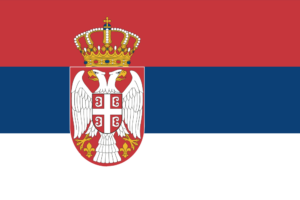
Serbia
The Country of the Week

Quick Facts
- Capital
- Belgrade (Beograd)
- Population
- 6,652,212 (2024 est.)
- Area
- 77,474 sq km
- Government
- parliamentary republic
- Religions
- Serbian Orthodox 81.1%, unknown 5.3%, Islam 4.2%, Catholic 3.9%, no response 2.5%, atheist 1.1%; less than 1%: other Christians, Protestant, agnostic (2022)
- Ethnic Groups
- Serb 83.3%, Hungarian 3.5%, Romani 2.1%, Bosniak 2%, other 5.7%, undeclared or unknown 3.4% (2011 est.)
- Currency
- Serbian dinars (RSD)
- Life Expectancy
- 75.3 years (2024 est.)
- Internet Domain
- .rs
- Climate
- in the north, continental climate (cold winters and hot, humid summers with well-distributed rainfall); in other parts, continental and Mediterranean climate (relatively cold winters with heavy snowfall and hot, dry summers and autumns)
- Terrain
- extremely varied; to the north, rich fertile plains; to the east, limestone ranges and basins; to the southeast, ancient mountains and hills
- Natural Resources
- oil, gas, coal, iron ore, copper, zinc, antimony, chromite, gold, silver, magnesium, pyrite, limestone, marble, salt, arable land
- Major Exports
- insulated wire, electricity, copper ore, plastic products, electric motors (2023)
Source: CIA World Factbook (public domain)
Overview
In 1918, the Croats, Serbs, and Slovenes formed a kingdom known after 1929 as Yugoslavia. The monarchy remained in power until 1945, when the communist Partisans headed by Josip Broz (aka TITO) took control of the newly created Socialist Federal Republic of Yugoslavia (SFRY).