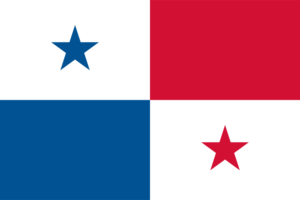
Panama
The Country of the Week

Quick Facts
- Capital
- Panama City
- Population
- 4,536,008 (2025 est.)
- Area
- 75,420 sq km
- Government
- presidential republic
- Religions
- Evangelical 55%, Roman Catholic 33.4%, none 10.1%, unspecified 1.5% (2023 est.)
- Ethnic Groups
- Mestizo (mixed Indigenous and White) 65%, Indigenous 12.3% (Ngabe 7.6%, Kuna 2.4%, Embera 0.9%, Bugle 0.8%, other 0.4%, unspecified 0.2%), Black or African descent 9.2%, Mulatto 6.8%, White 6.7% (2010 est.)
- Currency
- balboas (PAB)
- Life Expectancy
- 79.2 years (2024 est.)
- Internet Domain
- .pa
- Climate
- tropical maritime; hot, humid, cloudy; prolonged rainy season (May to January), short dry season (January to May)
- Terrain
- interior mostly steep, rugged mountains with dissected, upland plains; coastal plains with rolling hills
- Natural Resources
- copper, mahogany forests, shrimp, hydropower
- Major Exports
- copper ore, ships, refined petroleum, bananas, fish (2023)
Source: CIA World Factbook (public domain)
Overview
Explored and settled by the Spanish in the 16th century, Panama broke with Spain in 1821 and joined a union of Colombia, Ecuador, and Venezuela that was named the Republic of Gran Colombia. When the union dissolved in 1830, Panama remained part of Colombia.