
Niger
The Country of the Week
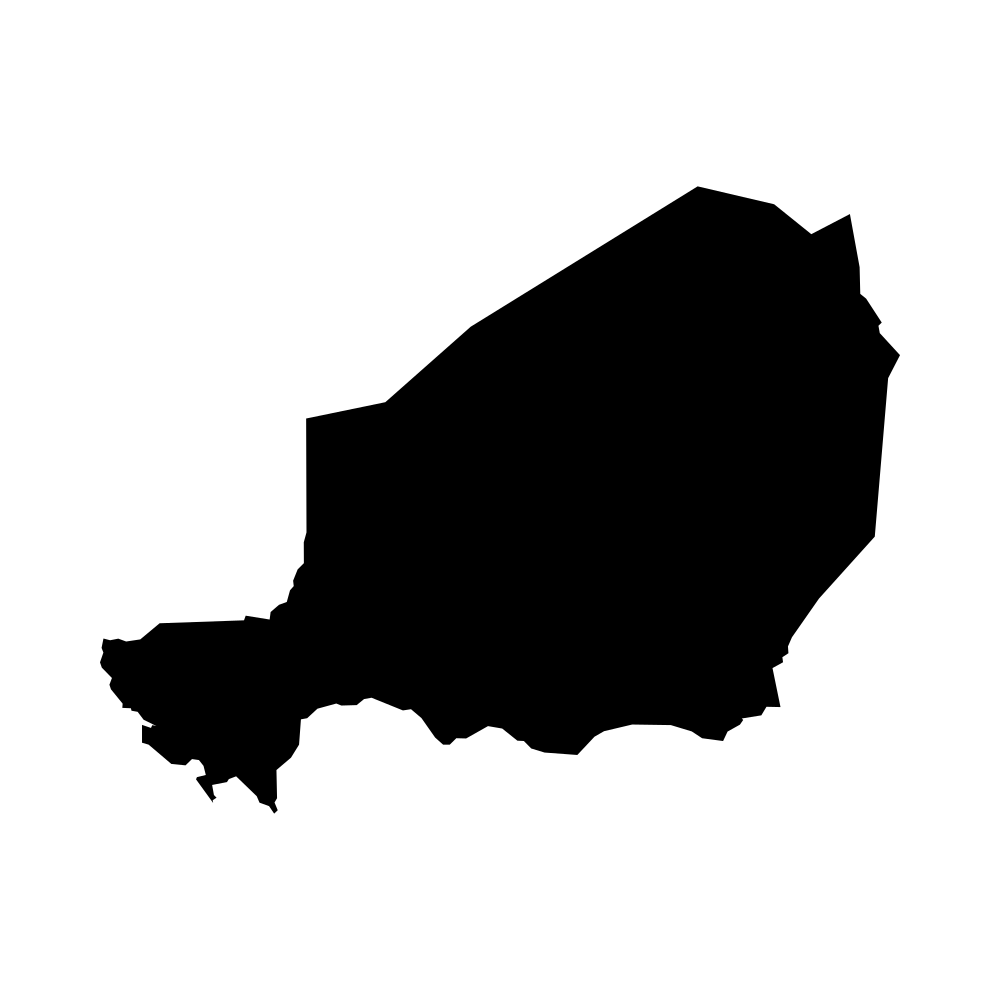
Quick Facts
- Capital
- Niamey
- Population
- 27,322,555 (2025 est.)
- Area
- 1.267 million sq km
- Government
- formerly, semi-presidential republic
- Languages
- Hausa, Zarma, French (official), Fufulde, Tamashek, Kanuri, Gurmancema, Tagdal
- Religions
- Muslim 95.5%, ethnic religionist 4.1%, Christian 0.3%, agnostics and other 0.1% (2020 est.)
- Ethnic Groups
- Hausa 53.1%, Zarma/Songhai 21.2%, Tuareg 11%, Fulani (Peuhl) 6.5%, Kanuri 5.9%, Gurma 0.8%, Arab 0.4%, Tubu 0.4%, other/unavailable 0.9% (2006 est.)
- Currency
- Communaute Financiere Africaine francs (XOF)
- Life Expectancy
- 60.9 years (2024 est.)
- Internet Domain
- .ne
- Climate
- desert; mostly hot, dry, dusty; tropical in extreme south
- Terrain
- predominately desert plains and sand dunes; flat to rolling plains in south; hills in north
- Natural Resources
- uranium, coal, iron ore, tin, phosphates, gold, molybdenum, gypsum, salt, petroleum
- Major Exports
- gold, oil seeds, uranium and thorium ore, radioactive chemicals, refined petroleum (2023)
Source: CIA World Factbook (public domain)
Overview
Nomadic peoples from the Saharan north and agriculturalists from the south settled present-day Niger. The Taureg kingdom of Takedda was one of the largest kingdoms in the north and played a prominent role in regional trade in the 14th century.