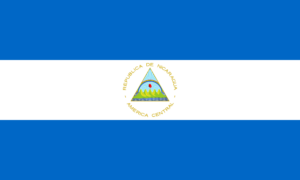
Nicaragua
The Country of the Week

Quick Facts
- Capital
- Managua
- Population
- 6,739,380 (2025 est.)
- Area
- 130,370 sq km
- Government
- presidential republic
- Religions
- Roman Catholic 44.9%, Protestant 38.7% (Evangelical 38.2, Adventist 0.5%), other 1.2%, (includes Jehovah's Witness and Church of Jesus Christ), believer but not belonging to a church 1%, agnostic or atheist 0.4%, none 13.7%, unspecified 0.2% (2020 est.)
- Ethnic Groups
- Mestizo (mixed Indigenous and White) 69%, White 17%, Black 9%, Indigenous 5%
- Currency
- cordobas (NIO)
- Life Expectancy
- 74.7 years (2024 est.)
- Internet Domain
- .ni
- Climate
- tropical in lowlands, cooler in highlands
- Terrain
- extensive Atlantic coastal plains rising to central interior mountains; narrow Pacific coastal plain interrupted by volcanoes
- Natural Resources
- gold, silver, copper, tungsten, lead, zinc, timber, fish
- Major Exports
- garments, gold, insulated wire, coffee, beef (2023)
Source: CIA World Factbook (public domain)
Overview
The Pacific coast of Nicaragua was settled as a Spanish colony in the early 16th century. Independence from Spain was declared in 1821, and the country became an independent republic in 1838.