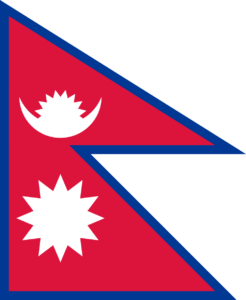
Nepal
The Country of the Week

Quick Facts
- Capital
- Kathmandu
- Population
- 31,334,402 (2025 est.)
- Area
- 147,181 sq km
- Government
- federal parliamentary republic
- Religions
- Hindu 81.2%, Buddhist 8.2%, Muslim 5.1%, Kirat 3.2%, Christian 1.8%; less than 1%: Prakriti, Bon, Jains, Sikh (2021 est.)
- Ethnic Groups
- Chhettri 16.5%, Brahman-Hill 11.3%, Magar 6.9%, Tharu 6.2%, Tamang 5.6%, Bishwokarma 5%, Musalman 4.9%, Newar 4.6%, Yadav 4.2%, Rai 2.2%, Pariyar 1.9%, Gurung 1.9%, Thakuri 1.7%, Mijar 1.6%, Teli 1.5%, Yakthung/Limbu 1.4%, Chamar/Harijan/Ram 1.4%, Koiri/Kushwaha 1.2%, other 20% (2021 est.)
- Currency
- Nepalese rupees (NPR)
- Life Expectancy
- 73 years (2024 est.)
- Internet Domain
- .np
- Climate
- varies from cool summers and severe winters in north to subtropical summers and mild winters in south
- Terrain
- Tarai or flat river plain of the Ganges in south; central hill region with rugged Himalayas in north
- Natural Resources
- quartz, water, timber, hydropower, scenic beauty, small deposits of lignite, copper, cobalt, iron ore
- Major Exports
- knotted carpets, garments, flat-rolled iron, synthetic fibers, palm oil (2023)
Source: CIA World Factbook (public domain)
Overview
During the late 18th and early 19th centuries, the principality of Gorkha united many of the other principalities and states of the sub-Himalayan region into a Nepali Kingdom.