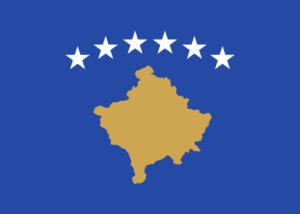
Kosovo
The Country of the Week

Quick Facts
- Capital
- Pristina (Prishtine, Prishtina)
- Population
- 1,977,093 (2024 est.)
- Area
- 10,887 sq km
- Government
- parliamentary republic
- Religions
- Muslim 95.6%, Roman Catholic 2.2%, Orthodox 1.5%, other 0.1%, none 0.1%, unspecified 0.6% (2011 est.)
- Ethnic Groups
- Albanians 92.9%, Bosniaks 1.6%, Serbs 1.5%, Turk 1.1%, Ashkali 0.9%, Egyptian 0.7%, Gorani 0.6%, Romani 0.5%, other/unspecified 0.2% (2011 est.)
- Currency
- euros (EUR)
- Life Expectancy
- 73.1 years (2024 est.)
- Internet Domain
- .xk
- Climate
- influenced by continental air masses resulting in relatively cold winters with heavy snowfall and hot, dry summers and autumns; Mediterranean and alpine influences create regional variation; maximum rainfall between October and December
- Terrain
- flat fluvial basin at an elevation of 400-700 m above sea level surrounded by several high mountain ranges with elevations of 2,000 to 2,500 m
- Natural Resources
- nickel, lead, zinc, magnesium, lignite, kaolin, chrome, bauxite
- Major Exports
- mattress materials, iron alloys, metal piping, scrap iron, building plastics (2021)
Source: CIA World Factbook (public domain)
Overview
The Ottoman Empire took control of Kosovo in 1389 after defeating Serbian forces. Large numbers of Turks and Albanians moved to the region, and by the end of the 19th century, Albanians had replaced Serbs as the majority ethnic group in Kosovo.