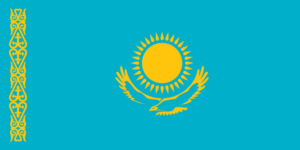
Kazakhstan
The Country of the Week

Quick Facts
- Capital
- Astana
- Population
- 20,432,662 (2025 est.)
- Area
- 2,724,900 sq km
- Government
- presidential republic
- Religions
- Muslim 69.3%, Christian 17.2% (Orthodox 17%, other 0.2%), Buddhism 0.1%, other 0.1%, non-believers 2.3%, unspecified 11% (2021 est.)
- Ethnic Groups
- Kazakh 71%, Russian 14.9%, Uzbek 3.3%, Ukrainian 1.9%, Uyghurs 1.5%, German 1.1%, Tatar 1.1%, other 4.9%, unspecified 0.3% (2023 est.)
- Currency
- tenge (KZT)
- Life Expectancy
- 73.3 years (2024 est.)
- Internet Domain
- .kz
- Climate
- continental, cold winters and hot summers, arid and semiarid
- Terrain
- vast flat steppe extending from the Volga in the west to the Altai Mountains in the east and from the plains of western Siberia in the north to oases and deserts of Central Asia in the south
- Natural Resources
- major deposits of petroleum, natural gas, coal, iron ore, manganese, chrome ore, nickel, cobalt, copper, molybdenum, lead, zinc, bauxite, gold, uranium
- Major Exports
- crude petroleum, gold, radioactive chemicals, refined copper, copper ore (2023)
Source: CIA World Factbook (public domain)
Overview
Ethnic Kazakhs derive from a mix of Turkic nomadic tribes that migrated to the region in the 15th century. The Russian Empire conquered the Kazakh steppe in the 18th and 19th centuries, and Kazakhstan became a Soviet Republic in 1925.