
Guinea
The Country of the Week
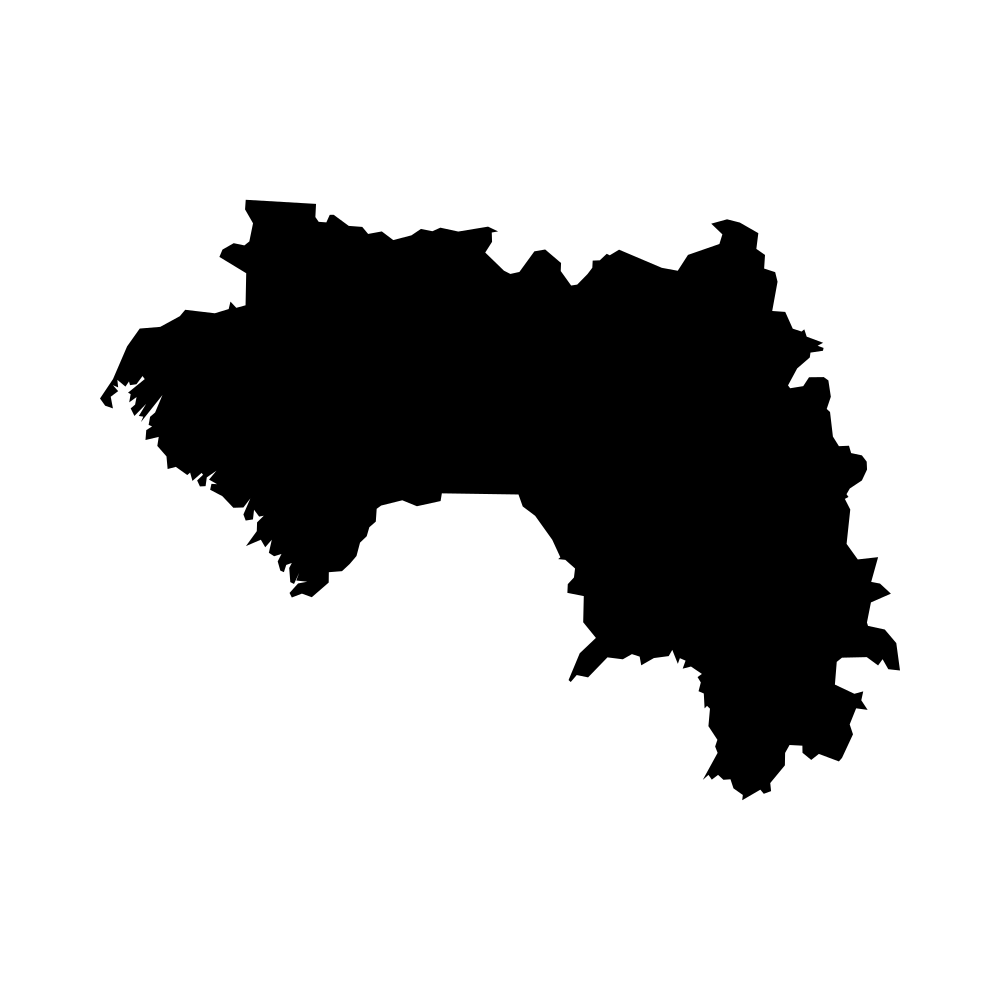
Quick Facts
- Capital
- Conakry
- Population
- 14,374,590 (2025 est.)
- Area
- 245,857 sq km
- Government
- presidential republic
- Languages
- French (official), Pular, Maninka, Susu, other native languages
- Religions
- Muslim 85.2%, Christian 13.4%, animist 0.2%, none 1.2% (2018 est.)
- Ethnic Groups
- Fulani (Peuhl) 33.4%, Malinke 29.4%, Susu 21.2%, Guerze 7.8%, Kissi 6.2%, Toma 1.6%, other/foreign 0.4% (2018 est.)
- Currency
- Guinean francs (GNF)
- Life Expectancy
- 64.6 years (2024 est.)
- Internet Domain
- .gn
- Climate
- generally hot and humid; monsoonal-type rainy season (June to November) with southwesterly winds; dry season (December to May) with northeasterly harmattan winds
- Terrain
- generally flat coastal plain, hilly to mountainous interior
- Natural Resources
- bauxite, iron ore, diamonds, gold, uranium, hydropower, fish, salt
- Major Exports
- gold, aluminum ore, cocoa beans, crude petroleum, coconuts/brazil nuts/cashews (2023)
Source: CIA World Factbook (public domain)
Overview
Guinea's deep Muslim heritage arrived via the neighboring Almoravid Empire in the 11th century. Following Almoravid decline, Guinea existed on the fringe of several African kingdoms, all competing for regional dominance.