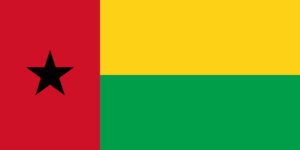
Guinea-Bissau
The Country of the Week

Quick Facts
- Capital
- Bissau
- Population
- 2,132,325 (2024 est.)
- Area
- 36,125 sq km
- Government
- semi-presidential republic
- Languages
- Portuguese-based Creole, Portuguese (official; largely used as a second or third language), Pular (a Fula language), Mandingo
- Religions
- Muslim 46.1%, folk religions 30.6%, Christian 18.9%, other or unaffiliated 4.4% (2020 est.)
- Ethnic Groups
- Balanta 30%, Fulani 30%, Manjaco 14%, Mandinga 13%, Papel 7%, unspecified smaller ethnic groups 6% (2015 est.)
- Currency
- Communaute Financiere Africaine francs (XOF)
- Life Expectancy
- 64.5 years (2024 est.)
- Internet Domain
- .gw
- Climate
- tropical; generally hot and humid; monsoonal-type rainy season (June to November) with southwesterly winds; dry season (December to May) with northeasterly harmattan winds
- Terrain
- mostly low-lying coastal plain with a deeply indented estuarine coastline rising to savanna in east; numerous off-shore islands including the Arquipelago Dos Bijagos consisting of 18 main islands and many small islets
- Natural Resources
- fish, timber, phosphates, bauxite, clay, granite, limestone, unexploited deposits of petroleum
- Major Exports
- coconuts/brazil nuts/cashews, fish, fish oil, processed crustaceans, malt extract (2023)
Source: CIA World Factbook (public domain)
Overview
For much of its history, Guinea-Bissau was under the control of the Mali Empire and the Kaabu Kingdom. In the 16th century, Portugal began establishing trading posts along Guinea-Bissau’s shoreline. Initially, the Portuguese were restricted to the coastline and islands.