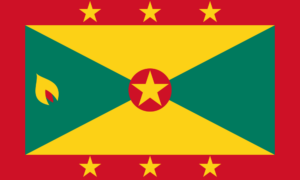
Grenada
The Country of the Week

Quick Facts
- Capital
- Saint George's
- Population
- 114,621 (2024 est.)
- Area
- 344 sq km
- Government
- parliamentary democracy under a constitutional monarchy; a Commonwealth realm
- Languages
- English (official), French patois
- Religions
- Protestant 49.2% (includes Pentecostal 17.2%, Seventh Day Adventist 13.2%, Anglican 8.5%, Baptist 3.2%, Church of God 2.4%, Evangelical 1.9%, Methodist 1.6%, other 1.2%), Roman Catholic 36%, Jehovah's Witness 1.2%, Rastafarian 1.2%, other 5.5%, none 5.7%, unspecified 1.3% (2011 est.)
- Ethnic Groups
- African descent 82.4%, mixed 13.3%, East Indian 2.2%, other 1.3%, unspecified 0.9% (2011 est.)
- Currency
- East Caribbean dollars (XCD)
- Life Expectancy
- 76.3 years (2024 est.)
- Internet Domain
- .gd
- Climate
- tropical; tempered by northeast trade winds
- Terrain
- volcanic in origin with central mountains
- Natural Resources
- timber, tropical fruit
- Major Exports
- nutmeg/cardamons, fish, wheat flours, frozen fruits and nuts, aqueous paints (2023)
Source: CIA World Factbook (public domain)
Overview
The indigenous Carib people inhabited Grenada when Christopher COLUMBUS landed on the island in 1498, but it remained uncolonized for more than a century. The French settled Grenada in the 17th century, established sugar estates, and imported large numbers of African slaves.