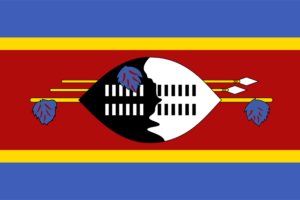
Eswatini
The Country of the Week

Quick Facts
- Capital
- Mbabane (administrative capital); Lobamba (royal and legislative capital)
- Population
- 1,137,268 (2025 est.)
- Area
- 17,364 sq km
- Government
- absolute monarchy
- Languages
- English (official, used for government business), siSwati (official)
- Religions
- Christian 90% (Zionist - a blend of Christianity and traditional African religions - 40%, Roman Catholic 20%, other Christian 30% - includes Anglican, Methodist, Church of Jesus Christ, Jehovah's Witness), Muslim 2%, other 8% (includes Baha'i, Buddhist, Hindu, indigenous, Jewish) (2015 est.)
- Ethnic Groups
- predominantly Swazi; smaller populations of other African ethnic groups, including the Zulu, as well as people of European ancestry
- Currency
- emalangeni
- Life Expectancy
- 60.7 years (2024 est.)
- Internet Domain
- .sz
- Climate
- varies from tropical to near temperate
- Terrain
- mostly mountains and hills; some moderately sloping plains
- Natural Resources
- asbestos, coal, clay, cassiterite, hydropower, forests, small gold and diamond deposits, quarry stone, and talc
- Major Exports
- scented mixtures, raw sugar, industrial acids/oils/alcohols, garments, wood (2023)
Source: CIA World Factbook (public domain)
Overview
A Swazi kingdom was founded in the mid-18th century and ruled by a series of kings, including MSWATI II, a 19th century ruler whose name was adopted for the country and its predominant ethnic group.