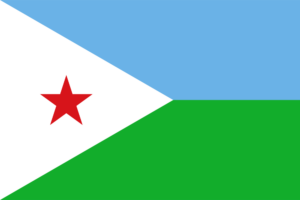
Djibouti
The Country of the Week

Quick Facts
- Capital
- Djibouti
- Population
- 1,013,703 (2025 est.)
- Area
- 23,200 sq km
- Government
- presidential republic
- Languages
- French (official), Arabic (official), Somali, Afar
- Religions
- Sunni Muslim 94% (nearly all Djiboutians), other 6% (mainly foreign-born residents - Shia Muslim, Christian, Hindu, Jewish, Baha'i, and atheist)
- Ethnic Groups
- Somali 60%, Afar 35%, other 5% (mostly Yemeni Arab, also French, Ethiopian, and Italian)
- Currency
- Djiboutian francs (DJF)
- Life Expectancy
- 65.9 years (2024 est.)
- Internet Domain
- .dj
- Climate
- desert; torrid, dry
- Terrain
- coastal plain and plateau separated by central mountains
- Natural Resources
- potential geothermal power, gold, clay, granite, limestone, marble, salt, diatomite, gypsum, pumice, petroleum
- Major Exports
- raw sugar, seed oils, cars, palm oil, rice (2023)
Source: CIA World Factbook (public domain)
Overview
Present-day Djibouti was the site of the medieval Ifat and Adal Sultanates. In the late 19th century, the Afar sultans signed treaties with the French that allowed the latter to establish the colony of French Somaliland in 1862.