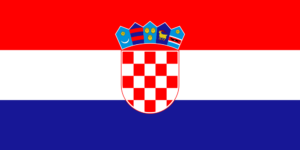
Croatia
The Country of the Week

Quick Facts
- Capital
- Zagreb
- Population
- 4,071,208 (2025 est.)
- Area
- 56,594 sq km
- Government
- parliamentary republic
- Religions
- Roman Catholic 79%, Orthodox 3.3%, Protestant 0.3%, other Christian 4.8%, Muslim 1.3%, other 1.1%, agnostic 1.7%, none or atheist 4.7%, unspecified 3.9% (2021 est.)
- Ethnic Groups
- Croat 91.6%, Serb 3.2%, other 3.9% (including Bosniak, Romani, Albanian, Italian, and Hungarian), unspecified 1.3% (2021 est.)
- Currency
- euros (EUR)
- Life Expectancy
- 77.7 years (2024 est.)
- Internet Domain
- .hr
- Climate
- Mediterranean and continental; continental climate predominant with hot summers and cold winters; mild winters, dry summers along coast
- Terrain
- geographically diverse; flat plains along Hungarian border, low mountains and highlands near Adriatic coastline and islands
- Natural Resources
- oil, some coal, bauxite, low-grade iron ore, calcium, gypsum, natural asphalt, silica, mica, clays, salt, hydropower
- Major Exports
- ships, garments, electricity, packaged medicine, wood (2023)
Source: CIA World Factbook (public domain)
Overview
The lands that today comprise Croatia were part of the Austro-Hungarian Empire until the end of World War I. In 1918, the Croats, Serbs, and Slovenes formed a kingdom known after 1929 as Yugoslavia.