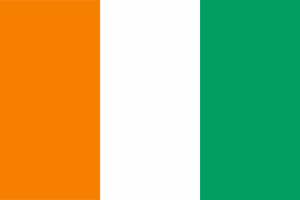
Cote d’Ivoire
The Country of the Week

Quick Facts
- Capital
- Yamoussoukro (legislative capital), Abidjan (administrative and economic capital); note - the US Embassy is in Abidjan
- Population
- 31,855,971 (2025 est.)
- Area
- 322,463 sq km
- Government
- presidential republic
- Religions
- Muslim 42.9%, Catholic 17.2%, Evangelical 11.8%, Methodist 1.7%, other Christian 3.2%, animist 3.6%, other religion 0.5%, none 19.1% (2014 est.)
- Ethnic Groups
- Akan 38%, Voltaique or Gur 22%, Northern Mande 22%, Kru 9.1%, Southern Mande 8.6%, other 0.3% (2021 est.)
- Currency
- Communaute Financiere Africaine francs (XOF)
- Life Expectancy
- 63.2 years (2024 est.)
- Internet Domain
- .ci
- Climate
- tropical along coast, semiarid in far north; three seasons - warm and dry (November to March), hot and dry (March to May), hot and wet (June to October)
- Terrain
- mostly flat to undulating plains; mountains in northwest
- Natural Resources
- petroleum, natural gas, diamonds, manganese, iron ore, cobalt, bauxite, copper, gold, nickel, tantalum, silica sand, clay, cocoa beans, coffee, palm oil, hydropower
- Major Exports
- gold, cocoa beans, rubber, refined petroleum, coconuts/brazil nuts/cashews (2023)
Source: CIA World Factbook (public domain)
Overview
Various small kingdoms ruled the area of Cote d'Ivoire between the 15th and 19th centuries, when European explorers arrived and then began to expand their presence. In 1844, France established a protectorate.