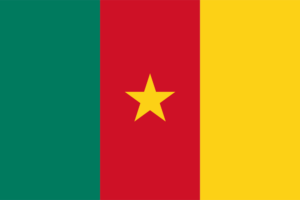
Cameroon
The Country of the Week

Quick Facts
- Capital
- Yaounde
- Population
- 31,518,954 (2025 est.)
- Area
- 475,440 sq km
- Government
- presidential republic
- Religions
- Roman Catholic 33.1%, Muslim 30.6%, Protestant 27.1% other Christian 6.1%, animist 1.3%, other 0.7%, none 1.2% (2022 est.)
- Ethnic Groups
- Bamileke-Bamu 22.2%, Biu-Mandara 16.4%, Arab-Choa/Hausa/Kanuri 13.5%, Beti/Bassa, Mbam 13.1%, Grassfields 9.9%, Adamawa-Ubangi, 9.8%, Cotier/Ngoe/Oroko 4.6%, Southwestern Bantu 4.3%, Kako/Meka 2.3%, foreign/other ethnic group 3.8% (2022 est.)
- Currency
- Cooperation Financiere en Afrique Centrale francs (XAF)
- Life Expectancy
- 64.2 years (2024 est.)
- Internet Domain
- .cm
- Climate
- varies with terrain, from tropical along coast to semiarid and hot in north
- Terrain
- diverse, with coastal plain in southwest, dissected plateau in center, mountains in west, plains in north
- Natural Resources
- petroleum, bauxite, iron ore, timber, hydropower
- Major Exports
- crude petroleum, natural gas, gold, cocoa beans, wood (2023)
Source: CIA World Factbook (public domain)
Overview
Powerful chiefdoms ruled much of the area of present-day Cameroon before it became a German colony known as Kamerun in 1884. After World War I, the territory was divided between France and the UK as League of Nations mandates.