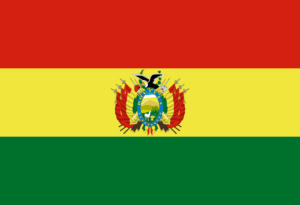
Bolivia
The Country of the Week

Quick Facts
- Capital
- La Paz (administrative capital); Sucre (constitutional [legislative and judicial] capital)
- Population
- 12,436,103 (2025 est.)
- Area
- 1,098,581 sq km
- Government
- presidential republic
- Religions
- Roman Catholic 65%, Protestant 19.6% (Evangelical (non-specific) 11.9%, Evangelical Baptist 2.1%, Evangelical Pentecostal 1.8%, Evangelical Methodist 0.7%, Adventist 2.8%, Protestant (non-specific) 0.3%), Believer (not belonging to the church) 0.9%, other 4.8%, atheist 1.7%, agnostic 0.6%, none 6.1%, unspecified 1.3% (2023 est.)
- Ethnic Groups
- Mestizo (mixed White and Indigenous ancestry) 68%, Indigenous 20%, White 5%, Cholo/Chola 2%, African descent 1%, other 1%, unspecified 3%; 44% other Indigenous group, predominantly Quechua or Aymara (2009 est.)
- Currency
- bolivianos (BOB)
- Life Expectancy
- 72.5 years (2024 est.)
- Internet Domain
- .bo
- Climate
- varies with altitude; humid and tropical to cold and semiarid
- Terrain
- rugged Andes Mountains with a highland plateau (Altiplano), hills, lowland plains of the Amazon Basin
- Natural Resources
- lithium, tin, natural gas, petroleum, zinc, tungsten, antimony, silver, iron, lead, gold, timber, hydropower
- Major Exports
- gold, natural gas, precious metal ore, zinc ore, soybean meal (2023)
Source: CIA World Factbook (public domain)
Overview
Bolivia, named after independence fighter Simón BOLÍVAR, broke away from Spanish rule in 1825. Much of its subsequent history has consisted of a series of coups and countercoups, with the last coup occurring in 1980.