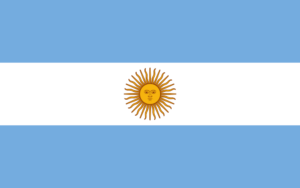
Argentina
The Country of the Week

Quick Facts
- Capital
- Buenos Aires
- Population
- 45,418,098 (2025 est.)
- Area
- 2,780,400 sq km
- Government
- presidential republic
- Religions
- Roman Catholic 62.9%, Evangelical 15.3% (Pentecostal 13%, other Evangelical 2.3%), Jehovah's Witness and Church of Jesus Christ 1.4%, other 1.2% (includes Muslim, Jewish), none 18.9% (includes agnostic and atheist), unspecified 0.3% (2019 est.)
- Ethnic Groups
- European (mostly Spanish and Italian descent) and Mestizo (mixed European and Indigenous ancestry) 97.2%, Indigenous 2.4%, African descent 0.4% (2010 est.)
- Currency
- Argentine pesos (ARS)
- Life Expectancy
- 78.8 years (2024 est.)
- Internet Domain
- .ar
- Climate
- mostly temperate; arid in southeast; subantarctic in southwest
- Terrain
- rich plains of the Pampas in northern half, flat to rolling plateau of Patagonia in south, rugged Andes along western border
- Natural Resources
- fertile plains of the pampas, lead, zinc, tin, copper, iron ore, manganese, petroleum, uranium, arable land
- Major Exports
- soybean meal, corn, trucks, soybean oil, crude petroleum (2023)
Source: CIA World Factbook (public domain)
Overview
In 1816, the United Provinces of the Río de la Plata declared their independence from Spain. After Bolivia, Paraguay, and Uruguay went their separate ways, the area that remained became Argentina.