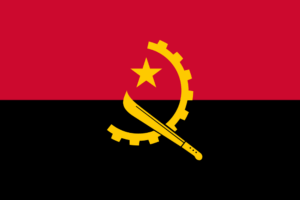
Angola
The Country of the Week

Quick Facts
- Capital
- Luanda
- Population
- 38,984,796 (2025 est.)
- Area
- 1,246,700 sq km
- Government
- presidential republic
- Languages
- Portuguese 71.2% (official), Umbundu 23%, Kikongo 8.2%, Kimbundu 7.8%, Chokwe 6.5%, Nhaneca 3.4%, Nganguela 3.1%, Fiote 2.4%, Kwanhama 2.3%, Muhumbi 2.1%, Luvale 1%, other 3.6% (2014 est.)
- Religions
- Roman Catholic 41.1%, Protestant 38.1%, other 8.6%, none 12.3% (2014 est.)
- Ethnic Groups
- Ovimbundu 37%, Kimbundu 25%, Bakongo 13%, Mestico (mixed European and native African) 2%, European 1%, other 22%
- Currency
- kwanza (AOA)
- Life Expectancy
- 62.9 years (2024 est.)
- Internet Domain
- .ao
- Climate
- semiarid in south and along coast to Luanda; north has cool, dry season (May to October) and hot, rainy season (November to April)
- Terrain
- narrow coastal plain rises abruptly to vast interior plateau
- Natural Resources
- petroleum, diamonds, iron ore, phosphates, copper, feldspar, gold, bauxite, uranium
- Major Exports
- crude petroleum, diamonds, natural gas, ships, refined petroleum (2023)
Source: CIA World Factbook (public domain)
Overview
Bantu-speaking people settled in the area now called Angola in 6th century A.D.; by the 10th century various Bantu groups had established kingdoms, of which Kongo became the most powerful.